


Installing a wood garage door is a one-day job for a trained crew, but it is not a casual weekend project. A typical U.S. installed price for a 7-by-8-foot wood door runs about $1,400 to $2,000 by one cost comparison, and the work includes removing the old door, setting heavy wood sections, hanging tracks and, most dangerous of all, handling the springs. This guide walks you through the whole process, from measuring to the final balance check, so you know what to expect whether you hire us or compare quotes.
TL;DR
- A wood door is heavy and its springs store dangerous force, so the spring and track work belongs with a trained technician.
- Measure the opening, headroom, side room and backroom before you order anything, and note every obstruction.
- Expect roughly $1,400 to $2,000 for a 7-by-8-foot installed wood door, with custom and larger doors costing more.
- Plan on most of a day for installation, plus time to remove the old door.
- We install and replace garage doors across Massachusetts and Connecticut, with same-day service and 24/7 emergency repairs.
Table of Contents
- Can you install a wood garage door yourself?
- What happens during a wood garage door installation
- How to measure for a new wood garage door
- What does wood garage door installation cost?
- How long does installation take?
- Choosing and caring for a wood door
- Our perspective on wood door installs
- Get your wood garage door installed by us
- FAQ
- Sources
Can you install a wood garage door yourself?
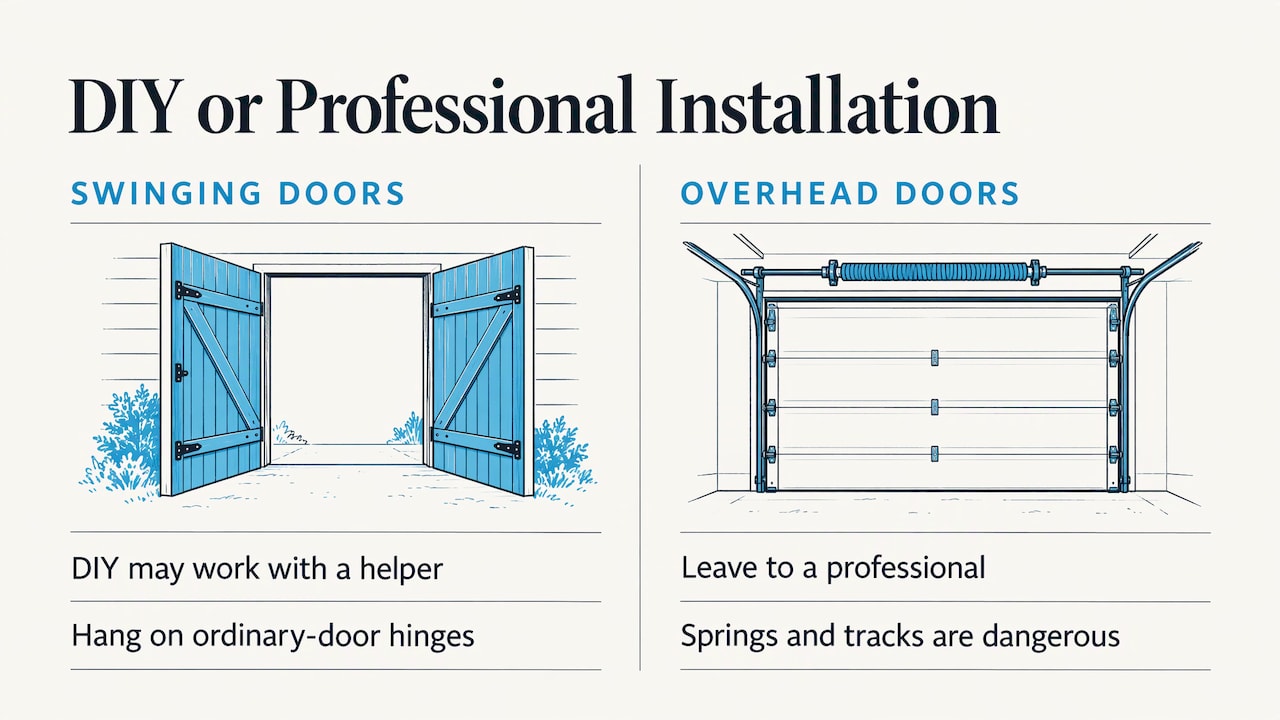
Sometimes, but it depends on the type of door. Family Handyman notes that a homeowner with a helper may manage swinging carriage-style wood doors, which hang on hinges much like an ordinary door. Overhead wood doors that ride on tracks are a different story. The same article advises leaving canopy and sectional wood doors to a professional because the springs and track components are dangerous.
The door itself is the first problem. A manufacturer installation manual says some unsprung doors weigh 100 to 500 pounds and may need an assistant or several helpers to lift and lower. Wood tends to sit at the heavy end of that range, and a section that slips while you are on a ladder can hurt you or crack the panel.
The second problem is the spring. The same manual says homeowners should not remove a standard torsion-spring assembly themselves, because uncontrolled release of spring force can cause serious or fatal injury. It says DIY installation only makes sense if you have help, the right tools, reasonable mechanical aptitude and the patience to follow the instructions exactly.
The risk is not abstract. A 2023 case series from Massachusetts Eye and Ear described seven open-globe eye injuries in people attempting garage door repairs, where a spring dislodged at high velocity. Final vision in those patients ranged from 20/125 to no light perception.
Industry guidance says the same. The DASMA consumer checklist tells homeowners not to repair or adjust springs, cables, brackets, mounting surfaces or other spring hardware. It assigns those tasks to a trained door-systems technician with the proper tools and instructions.
Our view: hang your own shelves, stain your own trim, but let a technician take on the door, the springs and the cables.
What happens during a wood garage door installation
Whether the job is a straight replacement or a first-time install in a new build, the sequence is much the same.
- Site check. The technician confirms the opening size, clearances, floor level and the condition of the jambs. Rotted jamb wood gets repaired first, because a new door cannot seal against a soft frame.
- Old door removal. The existing door is unloaded and taken down, springs included. The manufacturer manual above estimates removal of an existing door at roughly 1 to 3 hours.
- Hardware on the sections. Hinges, rollers and brackets are attached to each wood section before it goes up. Wood panels are drilled and fastened carefully so they do not split.
- Sections into the opening. The bottom section goes in first, then each one above it, stacked and fastened together.
- Track and rollers. Vertical and horizontal tracks are set, leveled and braced to the framing.
- Springs and cables. The spring system is installed and wound under controlled conditions, and the lift cables are connected.
- Opener and safety checks. The opener is mounted or reconnected, the safety sensors are aimed, and the technician tests balance and reversal.
The balance check at the end matters more than most owners realize. DASMA treats balance, spring hardware, operator function and entrapment protection as one safety system. A door that is slightly out of balance wears the opener faster and can fail to reverse the way it should.
How to measure for a new wood garage door
Good measurements prevent the most expensive mistake in this category: a custom wood door built to the wrong size. If you are ordering a door yourself or just want to compare quotes, collect these numbers.
- Width: measure the finished opening between the jambs at the top, middle and bottom, and use the smallest figure to be safe.
- Height: measure from the finished floor to the top of the opening on the left, center and right.
- Headroom: the clear space above the opening, which determines which track and spring setup will fit.
- Side room: the space to the left and right of the opening, where the vertical tracks mount.
- Backroom: the depth of the garage from the door back into the ceiling space, needed for the horizontal tracks and the opener.
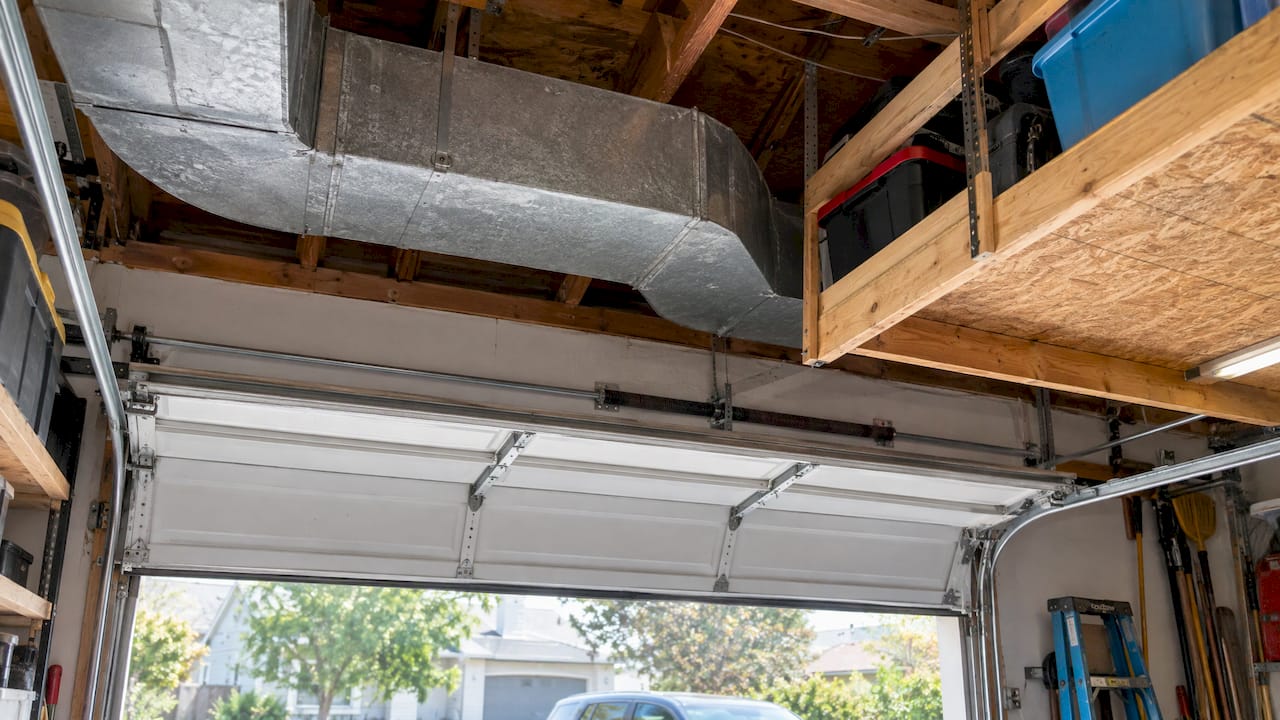
- Obstructions: lights, ducts, pipes, storage racks, steps and the existing opener, all of which can collide with tracks or panels.
The standard rule of thumb is that the door size should match the rough opening, and it helps to take measurements in feet and inches rather than rounding. Photograph the ceiling area and both side walls too. A technician can often spot a clearance issue in a photo that a tape measure misses.
If the garage is also a workshop or storage space, think about where the open door will sit overhead. Low ducts or a ceiling-hung storage platform are the most common reasons a planned track layout has to change.
What does wood garage door installation cost?
For a standard size, a published U.S. comparison from Fixr puts a 7-by-8-foot installed wooden garage door at $1,400 to $2,000 in total. That figure includes a wood door priced at $974 to $1,468 and about 5.4 hours of basic installation labor.
Treat that as a floor for a simple, small, stock-style door. Several things push a real quote higher:
- Size. Two-car doors use more wood, heavier springs and more labor.
- Custom design. Carriage-house styling, raised panels, windows and specialty species all raise the material cost.
- Insulation and hardware. Decorative hinges, handles and heavier-duty tracks add to the total.
- Removal and frame repair. Hauling away an old door and fixing a damaged jamb are separate line items on many jobs.
- Opener work. A heavier wood door often needs a stronger opener, or at least a fresh check of the existing one.
We do not publish flat prices for installation, because a wood door is rarely a stock job. We quote after we know the opening, the style and the condition of the frame. To see how we think about custom work, our guide to custom garage door installation cost, process and code checks goes deeper.
How long does installation take?
Plan for most of a day. The manufacturer manual gives a typical installation time of 9 to 12 hours for a homeowner following the instructions, with removal of the old door taking about 1 to 3 hours on top of that. An experienced crew works faster because it has done the sequence many times and arrives with the right tools, but a custom door, a rotted frame or a tricky opener can stretch the schedule.
Before the crew arrives, clear the garage so the work area is open. Move cars out, empty the space along both side walls, and make sure there is a clear path for carrying heavy wood sections. If the old door is still operating, it is also a good moment to note any problems you have been living with, such as a noisy opener or a door that drifts open.
Choosing and caring for a wood door
Wood is popular for a reason: it looks warm and traditional, and it can be built to match a particular home. The trade-off is that it asks for ongoing care, and the care starts before installation.
Bare wood needs a protective finish on all faces, including the top and bottom edges of each section. Sealing those edges keeps moisture out where it does the most harm. If you plan to paint or stain the door yourself, it helps to understand how wood prep affects finish, because clean, properly prepared surfaces hold a coating far better than rushed ones.
After installation:
- Re-inspect the finish once a year and touch up any worn spots promptly.
- Keep sprinklers and snow piles away from the bottom section.
- Listen and look for changes: a door that begins to bind, rub or sag may have shifted with the seasons.
- Schedule a professional tune-up so the technician can check balance, cables, rollers and sensors.
A wood door is heavier than many steel doors, and spring tension is set for that specific weight. If you add a heavy finish, glass or decorative hardware later, the balance can change, and that is a job for a technician. Our spring adjustment and broken spring repair service covers rebalancing and replacement. If you are curious about early symptoms, read our list of warning signs that a garage door spring is about to break.
Our perspective on wood door installs
We are a family-owned team, and we have a simple rule for wood doors: the door should look the way you imagined and open the way a good door should, every time, for years.
Most of what goes wrong with a new wood door is not about the wood. It comes from a spring set for the wrong weight, a track that is slightly out of plumb, or a sensor that was never aimed properly. Those are mechanical details, and they decide whether the door feels smooth or fights you.
That is why we treat the installation as a complete system, not just a door hung in a hole. Our technicians handle the door sections, tracks, springs, cables, opener and safety sensors together, and we explain each step in plain language so you know what you are getting.
We also think safety is the strongest argument for professional installation. Springs carry stored force, and heavy wood sections are awkward to hold. Having a trained crew do the lifting, winding and testing protects your family and your investment in the door.
If something goes wrong later, you will want someone local who answers the phone. We offer same-day service and 24/7 emergency repairs across Massachusetts and Connecticut, and we back our work with the kind of personal attention you expect from a family business.
the author
Get your wood garage door installed by us
We handle new door installation and replacement for homes and businesses in Massachusetts and Connecticut, including the springs, cables, tracks and opener connection that make a heavy wood door safe to use. You can see what is included on our new garage door installation page, or look at our Massachusetts garage door installation service if you are near Chicopee, Springfield, Amherst or the surrounding towns.

Send us your measurements, a few photos of the opening and a description of the style you want, and we will tell you what the job involves. If your current door has already failed, our repair services include emergency 24/7 visits.
FAQ
Can I replace a wood garage door myself?
Only in limited cases. Swinging carriage-style wood doors can sometimes be handled by a homeowner with a helper, but tracked overhead doors involve heavy sections and spring hardware that industry guidance says should be handled by a trained technician. Even with a helper, the risk of injury from the spring is the deciding factor.
How much does it cost to replace a wood garage door?
One U.S. cost comparison lists $1,400 to $2,000 for an installed 7-by-8-foot wood door. Larger, custom or insulated doors cost more, as do frame repairs and opener upgrades. Contact us with your measurements and style for a quote based on your actual opening.
How long does wood garage door installation take?
Most of a day. A manufacturer manual gives a typical installation time of 9 to 12 hours for a homeowner, with 1 to 3 more hours to remove the old door. A professional crew usually moves faster, though custom doors and frame repairs add time.
How do I measure for a new wood garage door?
Measure the opening width and height in several spots, then record headroom, side room and backroom. Note anything that could block tracks or panels, such as lights, ducts, pipes and storage racks. Share the numbers and a few photos with your installer before ordering.
Sources
- Wood Garage Doors: What To Consider Before Buying, Family Handyman
- Wood Residential Garage Door Instructions, manufacturer manual
- Open globe injuries from garage door springs, PMC
- Residential Sectional Garage Door and Electric Operator checklist, DASMA
- Wood vs Steel Garage Door, Fixr
- Ten Days of Prep for Paint Adhesion: Wood Science