

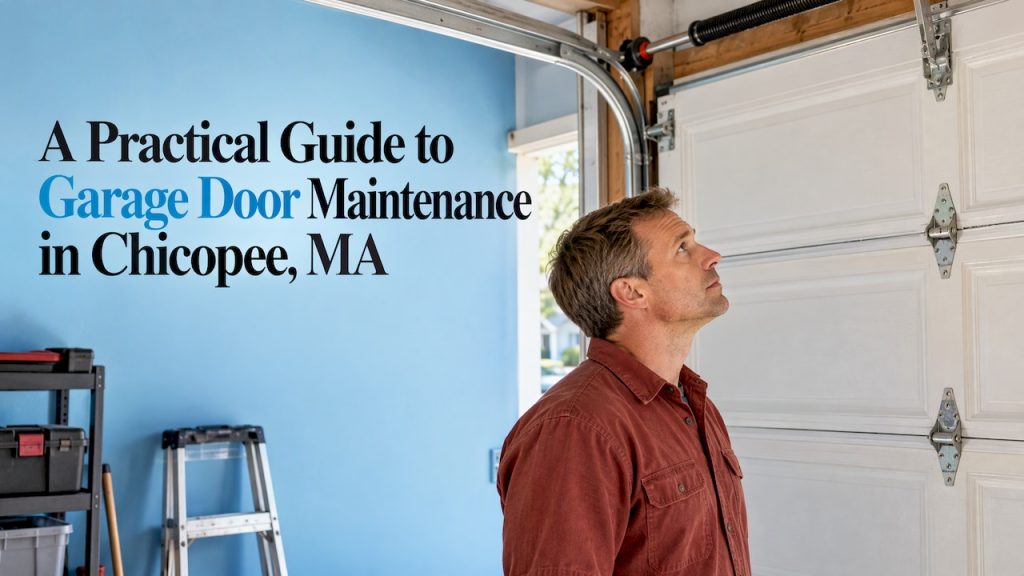
A garage door is the largest moving object in most Chicopee homes, and it runs on springs under heavy tension. Good maintenance has two parts. You do a short monthly check and some seasonal lubrication yourself. A trained technician does a full inspection about once a year. This guide covers both parts, shows where the line sits, and explains what Chicopee’s weather does to your door.
TL;DR
- Test your door monthly: watch it move, check the balance, test the auto-reverse and clean the photo eyes.
- Lubricate hinges, rollers and bearings twice a year, but only the parts your manufacturer says to oil.
- Book a professional inspection once a year. Springs, cables and brackets are never a DIY job.
- Noise that survives lubrication, a jerky door, frayed cables or rusty springs mean it is time to call.
- We service Chicopee and the surrounding Pioneer Valley towns, with same-day and 24/7 emergency service.
Table of Contents
- What a monthly check looks like
- Lubrication: twice a year, and only the right parts
- What Chicopee weather does to a garage door
- How often should a garage door be serviced?
- What a professional inspection covers
- Repairs you should never do yourself
- What does garage door maintenance cost?
- Maintenance with Speedy Garage Door Services in Chicopee
- A simple yearly maintenance calendar
- FAQ
- Sources
What a monthly check looks like
The Door & Access Systems Association International (IDA) lists a short set of monthly visual, balance, reversing and photo-eye tests that homeowners can do safely. The U.S. Consumer Product Safety Commission likewise advises inspecting the door and opener every 30 days. Set a reminder on the first of the month. It takes about ten minutes.
1. Look and listen
Stand inside the garage with the door closed. Look at the springs above the door, the cables running down each side, the rollers, the hinges and the track brackets. You are looking for frayed strands, gaps in the coils, rust, loose bolts and bent track. Then run the door once and listen. Grinding, popping or scraping that was not there last month is useful information.
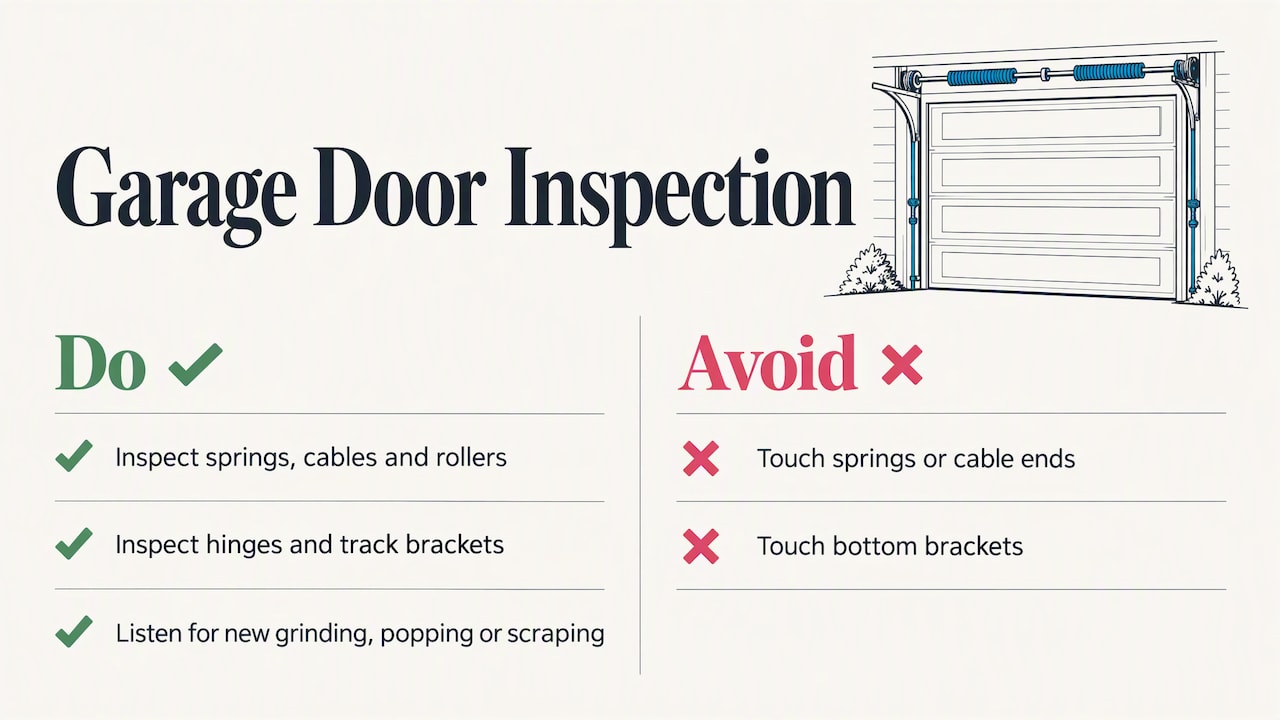
Do not touch the springs, the cable ends or the bottom brackets. They hold the door’s weight under tension. Your job is to look and report.
2. Test the balance
Pull the red emergency release cord with the door fully closed so the opener disconnects. Lift the door by hand to about waist height and let go. A balanced door stays put or drifts very slowly. If it slams down or shoots up, the springs are no longer carrying the load correctly. Close it carefully, reconnect the opener and stop using the door until it has been inspected. Balance problems are a common sign that springs are wearing out, which is why we wrote about the warning signs a spring is about to break.
It is also worth practicing the release itself. Massachusetts guidance on power outage safety tells residents to know how to work the manual release on an electric opener. In a winter storm outage, you do not want to learn it for the first time with the car stuck inside.
3. Test the auto-reverse
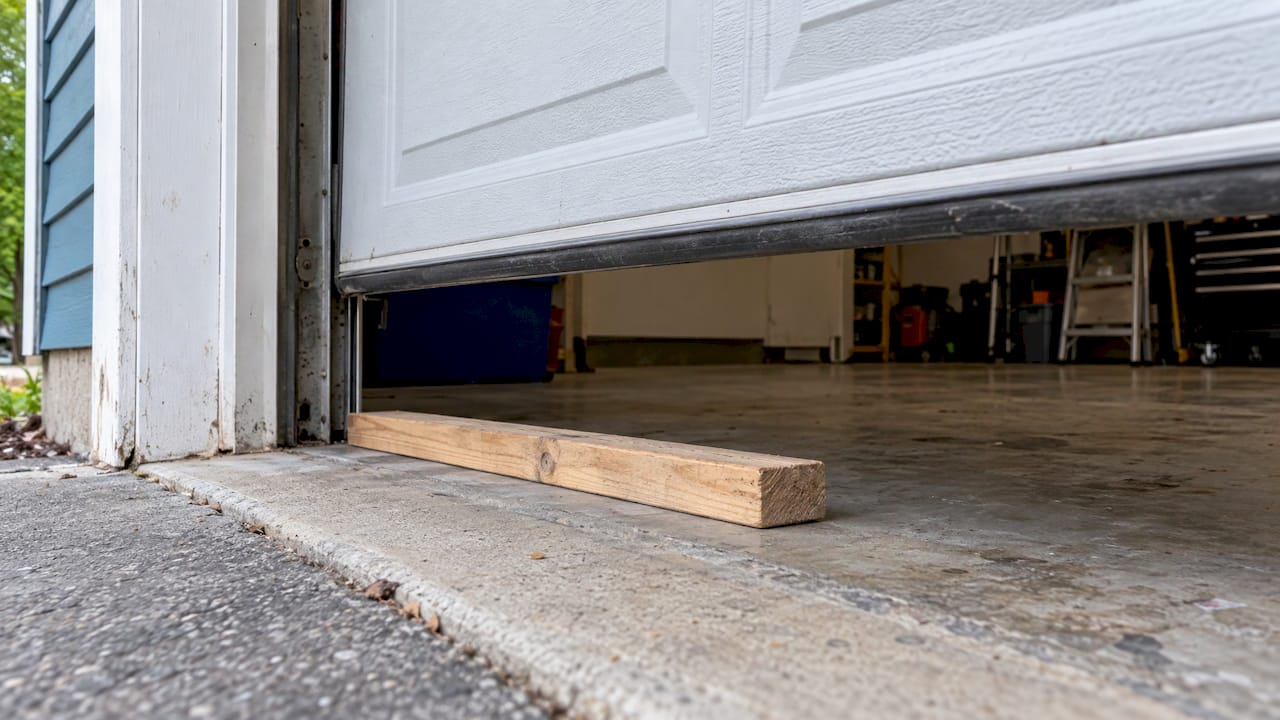
The CPSC’s method is simple: lay a 2×4 flat on the floor in the door’s path and close the door with the opener. The door should touch the board and reverse. If it stops and stays down, or keeps pushing, the opener’s force or travel settings need professional attention. This is the feature that protects children and pets, so do not skip it.
Massachusetts takes this seriously. The state’s home inspector standards, 266 CMR 6.04, require inspectors to observe garage door operation and report whether the door reverses or stops when it meets resistance. If you are buying or selling in Chicopee, expect this to be tested.
4. Check the photo eyes
The two small sensors near the floor on each side of the door should be clean and pointed at each other. Wipe the lenses with a soft cloth. Then wave an object through the beam while the door is closing. It should reverse right away. If the lights blink or the door will not close, the sensors may be misaligned or failing. That is a quick fix for a technician, and our team handles sensor replacement and other opener work.
Lubrication: twice a year, and only the right parts
IDA’s guidance is to lubricate hinges, rollers and tracks semi-annually. The details matter, though, because over-greasing or using the wrong product attracts dirt and can make things worse. Amarr’s owner’s manual calls for lubricating hinges, springs, rollers and bearings at least twice a year with a non-silicone lubricant, and says not to lubricate nylon rollers or the tracks. Other manufacturers differ, so check the manual for your brand.
A sensible routine:
- Close the door and unplug the opener if you will be working near moving parts.
- Wipe old grease and grit off the hinges and the metal roller stems.
- Apply a light coat of garage door lubricant to the hinge pivots and roller bearings.
- Wipe off the excess so it does not drip on the floor or your car.
- Run the door a few times to spread it, then check for smoother, quieter travel.
Good times for this are spring, after the salt and slush are gone, and fall, before the first freeze.
What Chicopee weather does to a garage door
Western Massachusetts asks a lot of a garage door. Temperatures swing well below freezing in January, road salt follows cars into the garage, and spring thaws bring moisture. IDA notes that weather changes can affect a door and lists the signs that mean you should call a professional: uneven or jerky movement, noise that continues after lubrication, broken or rusty springs and warped or cracked panels.
In practice, that means a few Chicopee-specific habits:
- Rinse salt off the bottom panel and weatherstripping after a storm, using a hose and a soft brush. Skip the pressure washer, which can push water into seams and behind panels.
- Check the bottom seal each fall. A cracked or flattened seal lets in cold air, meltwater and mice.
- Look at the trim and the joint where the frame meets the siding. Gaps there let water reach wood. A 9.5 oz WeatherMaster sealant is the kind of cartridge people use for that sort of exterior gap sealing. Check the label for the surfaces it is rated for before you use it.
- Expect stiffer operation in deep cold. Springs and openers work harder, so a door that was borderline in October can fail in January.
We covered the seasonal checklist in more detail in our guide to preparing your garage door for a New England winter.
How often should a garage door be serviced?
For a typical home, once a year is the standard answer from the industry. FLASH, the Federal Alliance for Safe Homes, recommends an annual check-up by a licensed and insured professional. That check covers the mounting hardware, tracks, rollers, balance and the lifting system.
A few things push you toward the shorter end of that range:
- The door is the family’s main entrance and opens many times a day.
- The springs are original and the house is more than ten years old.
- You have noticed any of the warning signs above.
- The door is heavy, such as insulated steel or solid wood, so the springs work harder.
A commercial door that opens dozens of times a day is a different case. Those doors benefit from a scheduled maintenance plan so inspections happen on a fixed calendar.
What a professional inspection covers
A proper tune-up is more than a squirt of oil. Here is what our technicians go through on a maintenance visit, and what you should expect from anyone you hire:
| Area | What is checked |
|---|---|
| Springs | Wear, rust, gaps, correct tension and balance |
| Cables and drums | Fraying, kinks, seating on the drum |
| Rollers and hinges | Wear, cracks, loose or worn stems, lubrication |
| Tracks and brackets | Alignment, dents, tight mounting hardware |
| Panels and sections | Cracks, warping, delamination, rust at the bottom edge |
| Opener | Gears, travel limits, force settings, belt or chain, receiver |
| Safety | Auto-reverse, photo eyes, manual release |
| Weather seal | Bottom seal and perimeter weatherstripping |
The technician should explain what they found, show you worn parts and tell you what can wait versus what is a safety issue. If a part needs replacing, you should get that in plain language before work starts.
Repairs you should never do yourself
The IDA draws a clear line: monthly homeowner checks can reveal imbalance, failed reversal, sensor problems and visible wear, but suspected defects belong with a trained technician. Frayed cables are named specifically as a reason to have the system inspected.
That means these jobs are off the DIY list:
- Replacing or adjusting torsion or extension springs
- Replacing cables or removing bottom brackets
- Re-hanging or straightening a bent track
- Replacing a damaged section while the door is up
The force stored in a wound spring or a loaded cable can cause serious injuries when it releases unexpectedly. If your door is stuck partway open or closed, leave it alone, keep people clear and call.
Perspective
We are a family-owned company, and what we see most often is a door that was fine last month and failed this morning. The spring or cable was wearing for a long time and nobody looked at it.
That is why we push maintenance over emergency repair. A short inspection catches the worn spring, the fraying cable or the opener that has stopped reversing. Those are far easier to fix on a day you choose than at 6 a.m. in January with the car stuck inside.
We also think a homeowner should know what is happening to their door. Our technicians explain what they see, what is urgent and what can wait, because clear communication matters more to us than a bigger invoice. We handle everything from tune-ups to springs, cables, rollers, tracks, openers and full replacements, and we offer same-day service and 24/7 emergency repairs when a door will not wait.
the author
What does garage door maintenance cost?
We do not publish a fixed price for maintenance, because the right scope depends on the door. A single-car steel door with a belt-drive opener needs a different visit than a heavy insulated double door, or a commercial overhead door in a busy shop. We will tell you what the visit includes and what it costs before we start, and if the inspection turns up a worn part, you will get the price for that part before we replace it.
What you can control is the size of the bill. A regular inspection tends to turn up small things, such as a worn roller or a loose bracket, while they are still small. Waiting often means a broken spring or a cable that has come off its drum, and that is the kind of call people make at night. Call us or request a quote on our garage door maintenance page, and tell us how many cars the garage holds, the age of the door and any noises or symptoms.
Maintenance with Speedy Garage Door Services in Chicopee
We are a family-owned garage door company serving Chicopee and the surrounding Massachusetts towns, from Springfield and West Springfield to Agawam, Longmeadow and Ludlow. Residential and commercial customers can book a maintenance visit, a repair or a new door. See our Chicopee service page for local details, or our door maintenance services if you are ready to schedule an inspection.
If something is already wrong, we can help with broken spring repair, cable, roller and track repairs, or 24/7 emergency garage door repair. If the door has reached the end of its life, our team also handles new door installation. Call (866) 734-2249 and tell us what you are seeing.
A simple yearly maintenance calendar
A calendar makes the routine easier to keep. This one fits New England seasons:
- Every month: visual check, balance test, auto-reverse test, photo-eye wipe and test.
- Spring (April or May): rinse off winter salt, lubricate the right parts, inspect the bottom seal and trim.
- Early fall (September or October): lubricate again, test the opener on a cold morning if you can, and book your professional inspection before the first hard freeze.
- After any big storm or impact: look over the door, tracks and opener, especially if a car has nudged the door or high winds hit the garage.
Most people find that the professional visit is best placed in fall. Any worn springs or cables are replaced before the coldest months, when they are most likely to fail.
FAQ
How often do garage doors need to be serviced?
Most homes should have a professional inspection about once a year. FLASH recommends an annual check-up by a licensed and insured professional. Do your own quick tests monthly and lubricate the right parts twice a year. A door used heavily, or one with older springs, may deserve extra attention.
Is garage door maintenance worth it?
Yes. Maintenance is how problems get found while they are small, such as a worn roller, a misaligned sensor or a fraying cable. It also confirms the safety features, like auto-reverse, still work. Our technicians explain what they find so you can decide what to do next.
Where can I get my garage door repaired in Chicopee, MA?
Speedy Garage Door Services repairs and maintains garage doors in Chicopee and nearby towns, with same-day service and 24/7 emergency repairs. We handle springs, cables, rollers, tracks, panels and openers. Call (866) 734-2249 or visit our Chicopee page.
Can I lubricate my own garage door?
Yes, as long as you follow your manufacturer’s instructions. Amarr’s manual, for example, says to lubricate hinges, springs, rollers and bearings but not nylon rollers or the tracks. Use a non-silicone garage door lubricant, wipe off the excess and never touch the spring tension itself.
Sources
- Safety & Maintenance, IDA
- How Changes in Weather Affect Your Garage Door, IDA
- Power Outage Safety Tips, Mass.gov
- Non-Reversing Automatic Garage Door Openers, CPSC
- 266 CMR 6, Standards of Practice, Mass.gov
- Amarr Residential Owner’s Manual
- Strengthen Your Garage Door for Storm Safety, FLASH
- WeatherMaster Sealant 9.5 Oz, Polar Tool & Supply